
#Relationship Goals (Romans 12:1-3)



Our series on God’s pursuit of the lost closed last week, and I hope it serves us well as we head into this next series. I have entitled this series #RelationshipGoals. Now, I know that phrase had its moment years ago, and most people used it for dating posts, memes, and internet jokes. I understand that. But that is not really where we are going with this. This is not a series about dating, at least not exclusively. This is a series about relationships in general.
One of the most fascinating realities of Christianity is this: God pursues a relationship with us, and then He calls us into relationship with each other. He does not simply save individuals and leave them scattered. He brings us into His family. He makes us one body. He teaches us how to live together as His people.
So if God has shown this kind of mercy to us, what kind of relationships should grow among us? What should the church look like when people who have been pursued by God begin living together under the mercy of God? How do we build strong relationships with one another? Why do we want them? What are we really aiming at?
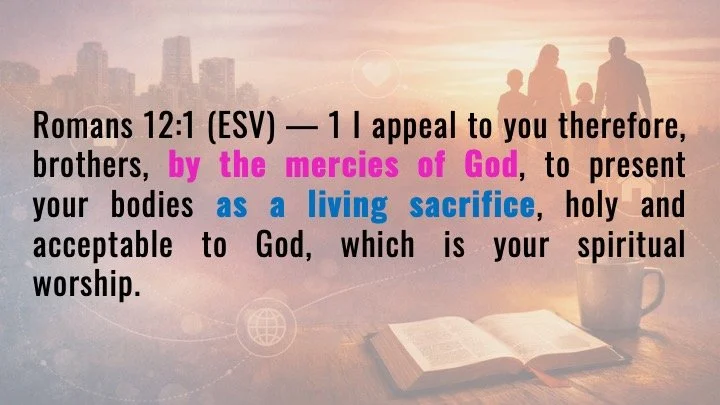
Romans 12 helps us answer those questions. I moved through this chapter pretty quickly in our Romans series last year, but I want us to slow down here and look at what it teaches more carefully. Paul writes, “I appeal to you therefore, brothers, by the mercies of God, to present your bodies as a living sacrifice, holy and acceptable to God, which is your spiritual worship. Do not be conformed to this world, but be transformed by the renewal of your mind, that by testing you may discern what is the will of God, what is good and acceptable and perfect.”
The Mercy Behind the Series
Everything in Romans turns on that phrase, “by the mercies of God.” Paul has spent eleven chapters showing us what God has done for sinners. He has shown us the wrath of God against sin, the inability of man to save himself, the justification that comes by faith, the peace we have through Christ, the gift of the Spirit, the faithfulness of God to His promises, and the wisdom of His saving plan. Then he comes to chapter 12 and says, in essence, “In view of all that mercy, here is the life that makes sense now.”
That matters because it tells us the motivation behind this whole series. Our relationship goals are not rooted in pressure. They are not rooted in guilt. They are not rooted in trying to become impressive. They are rooted in mercy. God pursued us when we were lost. God loved us when we were evil. God brought us near when we were far off. So now His mercy is supposed to change us. It is supposed to change what we want, how we think, and how we live with one another.
That is why Paul says, “Present your bodies as a living sacrifice.” Because of God’s mercy, we no longer belong to ourselves. We now choose to continually offer ourselves to God. Not part of ourselves. Not the leftovers. Ourselves. Our bodies, our minds, our strength, our time, our attention, our gifts, our resources, our lives. And Paul says this is our spiritual worship. In other words, worship is not merely what happens when we sing. Worship is not merely what happens when we gather. Worship is a life laid on the altar because God has been merciful.
That is what I want us to see as we begin this series. If we miss that, then these sermons will just sound like a list of things to do. They will sound heavy. They will sound like one more burden to carry. But if we understand the mercy of God, then these goals start to make sense. We are not trying to earn something from God. We are responding to what God has already done. We are not trying to manufacture relationships by force. We are asking what kind of people God’s mercy is supposed to make us, and we are searching diligently for the answer together.
Why We Need Relationship Goals
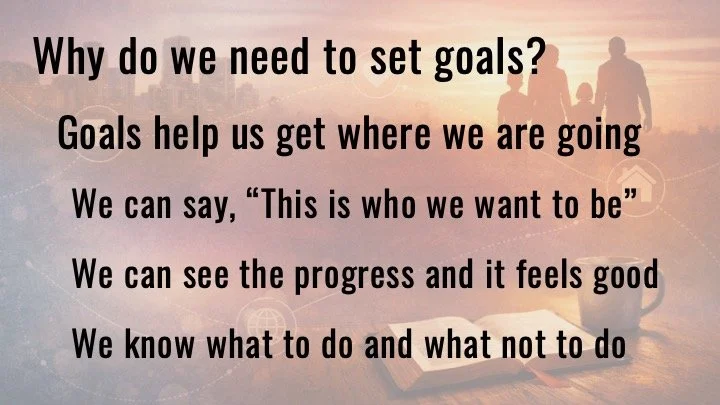
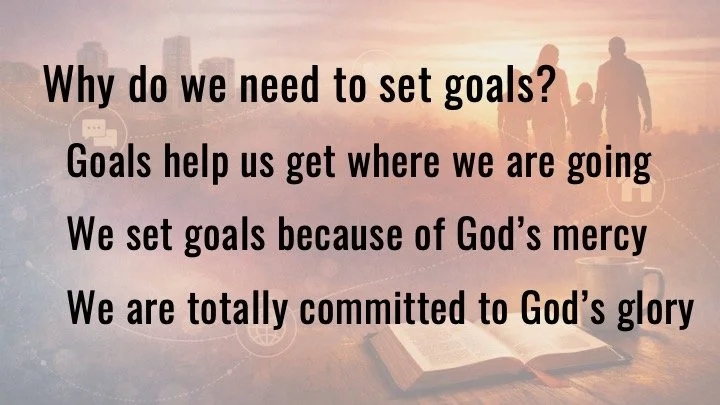
That is what I mean by #RelationshipGoals. It is important for us, as a congregation of God’s people, to have goals. A goal gives us aim. It gives us direction. It gives us a vision for the future. It keeps us from drifting. If you do not know where you are going, you will end up wherever the current takes you. But a goal says, “This is what we are aiming at. This is what we want to become. This is the kind of church we want to be.”
And it is important not only to have goals, but to have the right goals with the right motivation. If the goal is wrong, we will end up in the wrong place. If the motivation is wrong, we may do the right things in the wrong spirit. That is why Paul starts with mercy before he ever starts listing what transformed people do.
The Destination: Transformation, Not Conformity
So what is the destination? What are we aiming at? Paul tells us in the next verses. “Do not be conformed to this world, but be transformed by the renewal of your mind.” Before he tells us where we are going, he tells us how we will never get there. We will not get there by conforming to the world. We will not get there by adopting worldly ways of thinking. We will not get there by chasing applause, attention, image, or influence. We will not get there by acting like the point of church is to build our platform, defend our preferences, or win admiration.
The world is always pulling us toward self-exaltation. The world trains us to ask, “How do I stand out? How do I get recognized? How do I protect myself? How do I make this about me?” Paul says that way of thinking will never get us where God wants us to go.
Instead, he says, “Be transformed by the renewal of your mind.” This is not behavior modification. This is transformation. This is not putting on a religious costume. This is God changing how we think from the inside out. And that is important because all of the goals we are going to study in this series are transformation goals. These are not merely external actions to copy. These are ways of thinking and living that require renewal from within. You can fake some religious activity for a little while, but you cannot build healthy spiritual relationships on a worldly mind. Our thinking has to be changed.
The Mark of Renewal: Humble Thinking
Paul then says, “For by the grace given to me I say to everyone among you not to think of himself more highly than he ought to think, but to think with sober judgment.” There it is. There is the first mark of a renewed mind. Humility. Sober judgment. Thinking rightly about ourselves. Not inflated. Not self-obsessed. Not driven by pride. A transformed mind does not think too highly of self. It does not make self the center of everything. It learns to see itself honestly before God.
And that matters because pride destroys relationships. Pride poisons service. Pride makes us compare. Pride makes us defensive. Pride makes us easily offended. Pride makes us want positions without responsibility, recognition without sacrifice, influence without humility. Pride asks, “Why am I not being noticed?” Humility asks, “How can I help?” Pride says, “What about me?” Humility says, “What is needed?” If our relationships are going to be strong, then our minds have to be renewed out of worldly pride and into godly humility.
The Body Changes Everything
Then Paul explains why. “For as in one body we have many members, and the members do not all have the same function, so we, though many, are one body in Christ, and individually members one of another.” Christianity is not just about me and Jesus. God does not save us into isolation. He saves us into a body. He joins us to Christ, and in joining us to Christ, He joins us to each other. We are one body in Christ, and individually members one of another.
That means my life is not my own. It also means your life is not meant to be lived in detachment from the rest of the body. God wants a relationship with us, and God wants us to live in relationship with each other as His people.
That is why this series matters. It is not fluff. It is not shallow. It is not a gimmick. This is about what kind of people God’s mercy is making us into together. What kind of church are we becoming? Are we becoming a church where people know how to serve, love, honor, and speak truth in love? Or are we just gathering in the same room while remaining largely disconnected in heart and purpose? Romans 12 says the mercy of God should produce a transformed people who know how to live together as one body.
The Goals Before Us
Over the next several weeks, I want us to think carefully about the kinds of relationships God wants to build among His people.
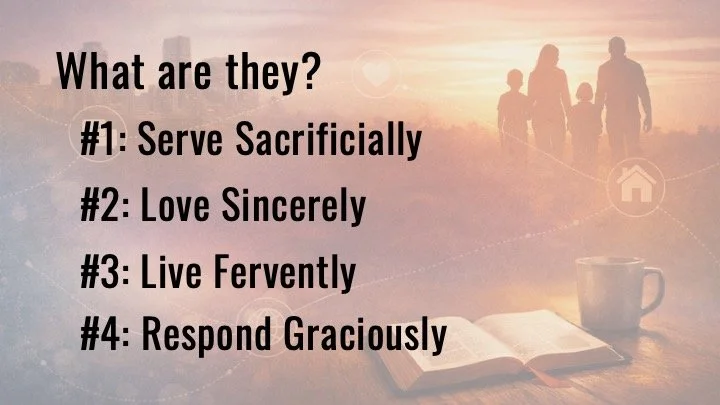
Next week, we are going to begin with sacrificial service. If we belong to one body, then we are not here merely to be served. We are here to offer ourselves to God for the good of one another.
After that, we are going to talk about honoring one another. In a world that teaches us to chase status and protect ego, God calls His people to outdo one another in showing honor.
Then we are going to look at zeal. God does not want half-hearted church life. He does not want a people who are cold, detached, and going through the motions. He wants a people who are fervent in spirit, serving the Lord.
And finally, we are going to think about speaking the truth in love. Strong relationships are not built on flattery, avoidance, or pretending. They are built when God’s people learn how to speak honestly, faithfully, and lovingly with one another.
Those are the goals. Not random church activities. Not slogans. Not a temporary push to make ourselves feel more involved. These are transformation goals. These are mercy-shaped goals. These are the kinds of things the grace of God should produce in a church.
Conclusion
So as we begin this series, I do not want us to think first about what everybody else needs to do. I want us to think about what God’s mercy is meant to do in us. God pursued us. God brought us near. God made us His people. And now He is teaching us how to live together as His people.
Ask yourselves, “What does God’s mercy mean to you?”
That means this series is not about becoming trendy, impressive, or successful by worldly standards. It is about becoming the kind of church that reflects the mercy of God. A church where people serve as part of the body of Christ. A church where people honor one another. A church where people are fervent in spirit. A church where people speak truth in love.
That kind of church does not happen by accident. It happens when the mercy of God keeps transforming the way we think and live.
So before we spend the next several weeks studying these goals, we need to ask God to do His work in us. We need Him to renew our minds and spirits. We need Him to humble our hearts. We need Him to teach us how to live as one body.
Let’s pray.