
Failing At Confrontation (1 Samuel 1-4)



My grandfather used to have a chihuahua named Cuddles. It was a funny little dog. When it would sit in my granddaddy’s lap, it was the biggest dog with the biggest bark and bite you had ever seen. But if he put it down, it would cower in fear and roll over on its back if you came up to it. It would do the same thing at the door, but when you came inside, it was scared of you.
There are some people this way. They are just really bad at confrontation. They act tough and mean when they feel safe, spouting off about what others are doing wrong and speaking with conviction to condemn others. Then, as soon as there is real risk, they get weak and stumble over their words. They value something more than their convictions.
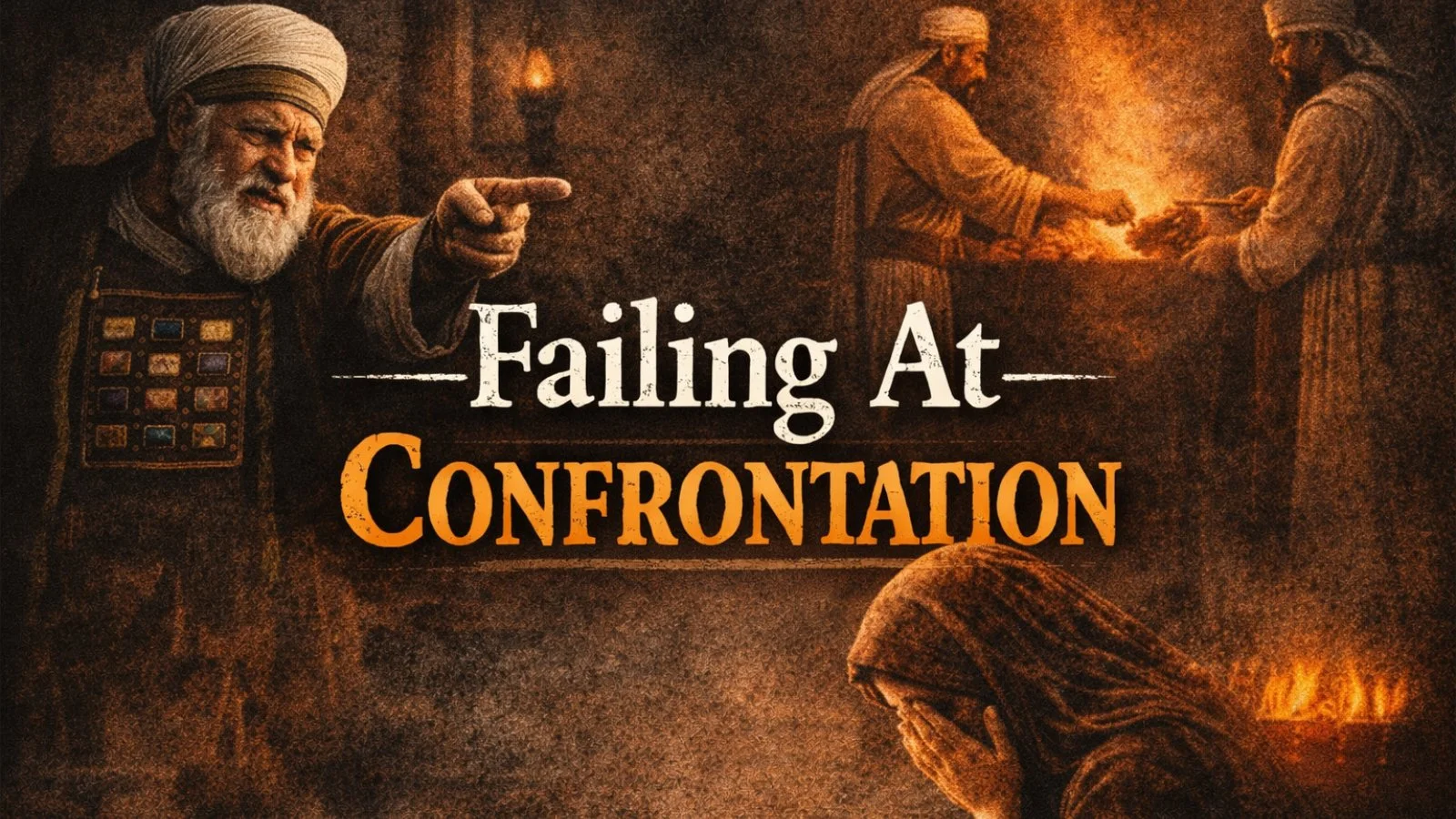
This is Eli.
In the story of Eli, we have a very difficult confrontation to make with ourselves.
The Ability To Confront People (1 Samuel 1)
When we first hear about Eli, he is a priest at the tabernacle in Shiloh. He had been a priest and a judge for Israel for a long time. So he appears to have been a man of great faith. However, the first thing we read about Eli is a mistake he made. Hannah had come to the tabernacle to draw near to God and pray that God would give her a son whom she would give to the Lord. She was crying out to God in anguish, but no words were coming out of her mouth. Eli assumed that Hannah was drunk.
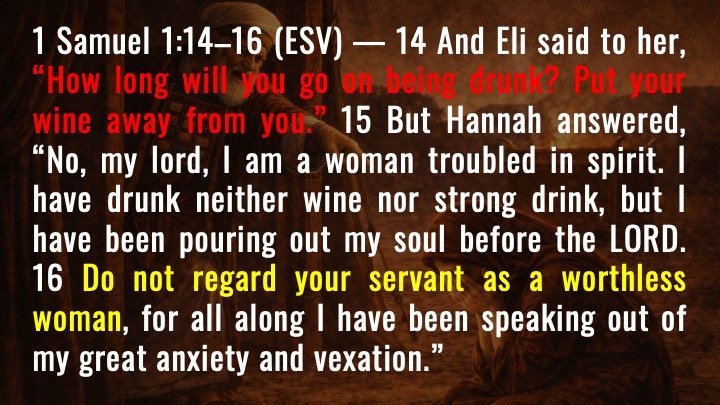
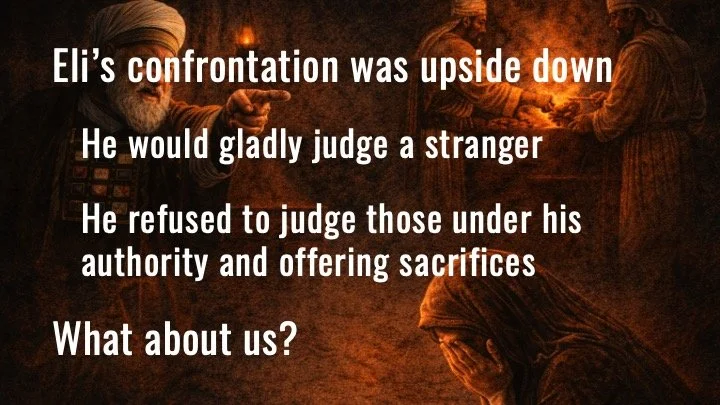
He wasn’t going to sit by while a drunk woman came up to the tabernacle and defiled it. He stood up to her, saying, “How long will you go on being drunk? Put your wine away from you.” In his mind, she was a worthless woman. He appears to be a man with strong convictions, but he is lacking in compassion and understanding. Eli was sharp with a wounded woman, mistaking brokenness for rebellion.
This is one of the easiest traps for religious people to fall into. We can become very alert to what looks wrong while failing to understand what is actually going on. We can be quick to accuse, correct, and condemn the innocent. He trusted the feeling in his gut that said, “That’s not normal. It must be wrong and sinful.”
How often do we do that? How often are we completely misreading the situation of people around us? We need eyes to see like God sees and ears to hear like God hears. The problem is that we have grown accustomed to our own ways, and we are too busy to understand others.
Hannah needed understanding, not suspicion. She needed compassion, not a lecture.
To Eli’s credit, he listened to Hannah and blessed her. Then, when God had done what Eli asked Him to do, Eli took the young boy Samuel under his wing and watched over him as his own.
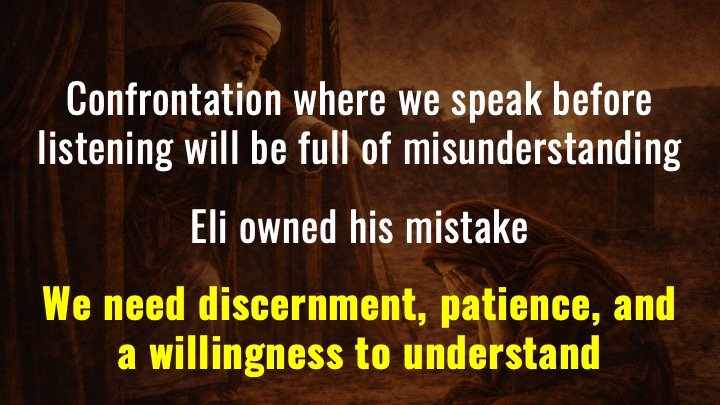
This is important for us to see, because we often make the mistake of Eli. We condemn the innocent, and then we try to justify what we have done and double down. He was humble, and we must be too. Accept the fact that you were wrong in making a hasty judgment. That is what people of faith do. They own it.
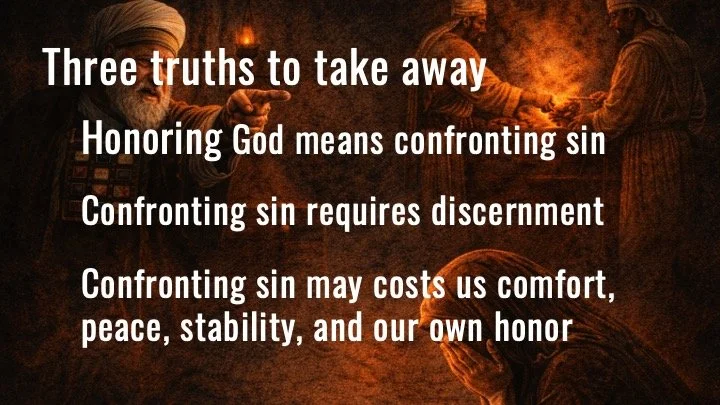
But it would be better if we learned not to put our foot in our mouths to begin with. We need discernment, patience, and a willingness to listen with understanding. These should all precede confrontation.
The Inability To Confront People (1 Samuel 2)
In the rest of Eli’s story, we learn something very disturbing. In chapter 2, we are introduced to Eli’s sons, Hophni and Phinehas. These men, we are told, are worthless. Having a righteous judge and priest as a father did not give them any spiritual advantage. Instead, they used their role in the tabernacle as a gateway to evil. They did not know the Lord. They did not fear God. They handled the holy things for the people of Israel, but they despised God’s holiness and profaned the sacrifices God had given them to conduct.
Imagine taking your offering to the Lord and having these men ruin it. Israelites were told specifically what to do in the time of sacrifice to honor the Lord. Priests had their job as well. But these priests took what belonged to God, refused to do things according to God’s commands, and ignored the pleas of Israelites. If the people would not give them the food, these men would take it by force.
We also find out that they were committing sexual immorality with the women who were serving at the entrance of the tent of meeting. These men were completely failing to see the enormity of their sin and the importance of their role.
Where was their father? The Scriptures tell us that Eli knew about this. He was not kept in the dark. He heard all that people were saying and knew the devastation they were causing.
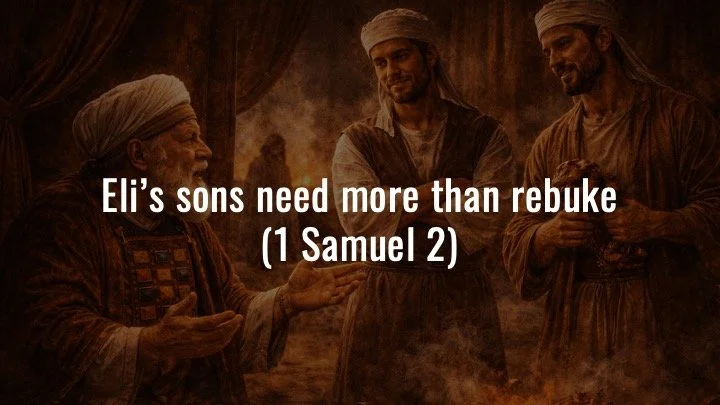
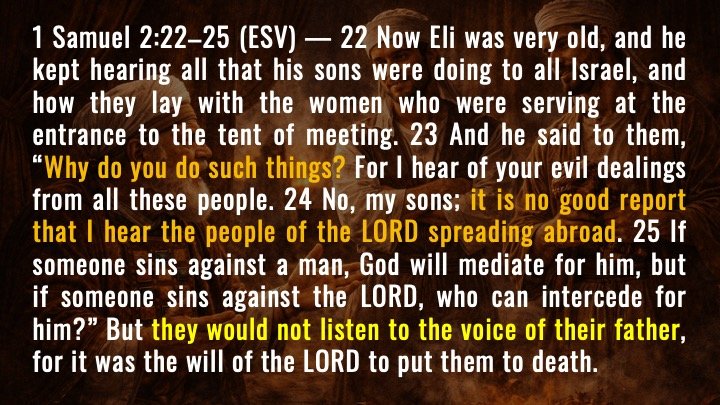
He went to his sons and said, “Why do you do such things? For I hear of your evil dealings from all these people. No, my sons; it is no good report that I hear the people of the LORD spreading abroad. If someone sins against a man, God will mediate for him, but if someone sins against the LORD, who can intercede for him?” These are true words. He is trying to correct his sons, but notice the complete lack of authority. He does not speak to them with the same conviction and condemnation that he used with Hannah.
After this “confrontation,” if you can call it that, the men kept on doing what they were doing before. Can I just say that this is what weak parenting leads to? If parents are unwilling to be in an authoritative role, they should not be parents. Children are not in charge. If children are in charge, they grow up to look like these two men. They do not respect their father, and they do not respect the Lord.
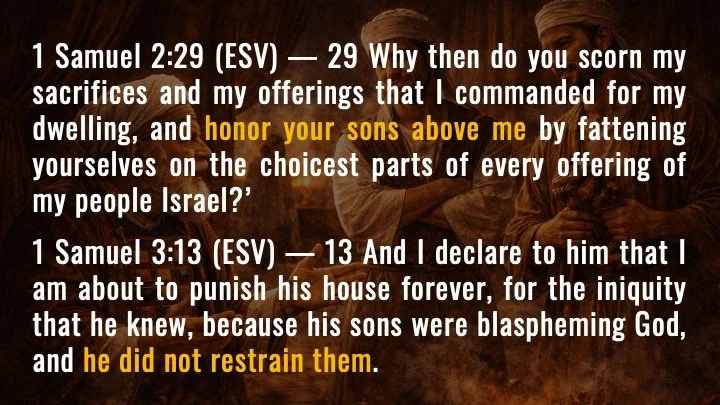
The Scriptures condemn Eli. God curses him and his family because “he did not restrain them.” That sentence explains this whole tragedy that is about to happen.
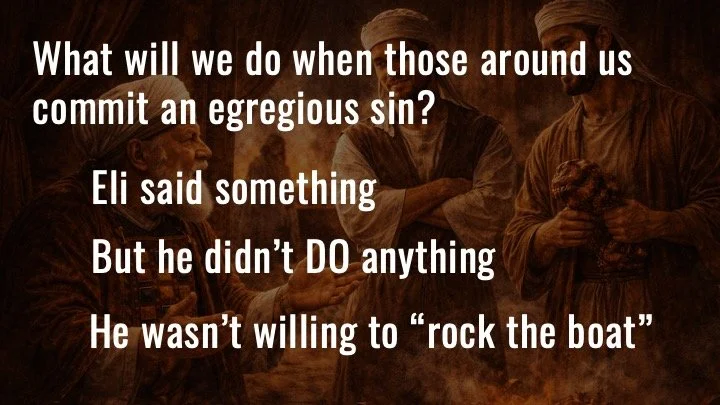
Eli said something, but he did not say enough. He was saddened over the sin, but he did not do anything to stop it. He spoke and failed to restrain these rebellious priests from defiling God’s house.
Eli even named one of these sons Phinehas. That name would have carried weight in Israel. The earlier Phinehas in Numbers 25 is remembered for refusing to let blatant sin continue in the camp. He acted with zeal for the Lord when others stood by. He would not watch open rebellion spread while everyone shrugged their shoulders.
Then here comes Eli’s Phinehas, and the father who gave him that name refuses to confront sin the way that earlier Phinehas had.
That is odd. And it is sad.
I have known a man who caught his teenage son doing sinful and foolish things. He warned him and told him that if it continued, he would take his son’s name before the church and call him out for his sin. His son straightened up. That is what we need. Men who are willing to call it what it is instead of sweeping it under the rug.
Honoring Men
The man of God comes to Eli in 1 Samuel 2 and delivers one of the sharpest rebukes in the book, directly from God.
1 Samuel 2:29–30 says, “Why then do you scorn my sacrifices and my offerings that I commanded for my dwelling, and honor your sons above me by fattening yourselves on the choicest parts of every offering of my people Israel?’ Therefore the LORD, the God of Israel, declares: ‘I promised that your house and the house of your father should go in and out before me forever,’ but now the LORD declares: ‘Far be it from me, for those who honor me I will honor, and those who despise me shall be lightly esteemed.’”
His confrontation was upside down because his heart was upside down. God tells Eli that he has honored his sons above Him. This is what we are doing when we refuse to confront sin.
Sometimes words are not enough. Faithful confrontation sometimes requires action. If evil remains, corruption continues and spreads. Worship stays polluted. God is dishonored. There are times in our lives when real love requires more than words of disapproval. If we really love God, we will respond with action.
Honoring God will cost us our comfort, family peace, relational stability, and our own honor among men.
Learning To Confront Sin
Sometimes we confront because something annoys us, embarrasses us, or makes us uncomfortable. That was Eli with Hannah. Other times we stay silent because confronting the real issue would cost too much. That was Eli with his sons.
So the problem is not merely that we do not know how to confront. The deeper problem is that our loves are disordered. We are governed by self more than by God. We are driven by comfort more than holiness. We fear losing people more than we fear dishonoring the Lord.
That is not just what happened in Eli’s day. That is what happens anywhere discernment dies. Tender souls get crushed while hard hearts keep moving. The sincere are discouraged while the shameless are emboldened. People who are weak but trying to seek the Lord get corrected out of place, while people who are actually doing damage are allowed to keep going because someone does not want conflict.
That kind of leadership poisons everything.
And in Eli’s story, the consequences spread far beyond the walls of his own house. His sons die. Eli dies. Israel suffers defeat. The ark is captured. The glory departs from Israel. The rot in one household reaches the whole community.
Eli may have thought he was avoiding pain. He was only postponing it until it became catastrophe. That is what tolerated sin does. It does not stay little because you leave it alone. It grows. It settles in. It becomes normal. And once sin becomes normal, judgment is not far behind.
So if there is something in your life, your family, your leadership, your relationships, your home, or your habits, and you know it is wrong, you are not helping anyone by refusing to deal with it.
Our Faithful Priest and Judge
When we look at Eli, we become grateful for Jesus. Jesus never condemned the innocent, and He always confronted the rebellious. He was faithful in all He did, putting actions to words and making it clear what righteousness truly looks like.
If you want to come to Jesus, He will confront you for your sin. God loves you too much to leave you in your sin. His grace does not pretend sin is harmless. It does not protect sin from exposure. It brings sin to light so sinners can be saved.
Let’s be men and women who let Jesus in and remove whatever is unholy inside of us. Let’s be men and women who follow Jesus and handle confrontation with righteousness. Don’t be like Cuddles, biting at everyone when you feel safe and cowering when things get hard. Discern faithfully and honor God over men.