
How Far Will God Go? (Luke 21-24)
Most people say they care until caring becomes costly.
It is easy to say, “I love you,” when love is convenient. It is easy to say, “I’m here for you,” when being there costs nothing. But the truth about love is revealed when the price gets high. Real love keeps moving toward people when it hurts.
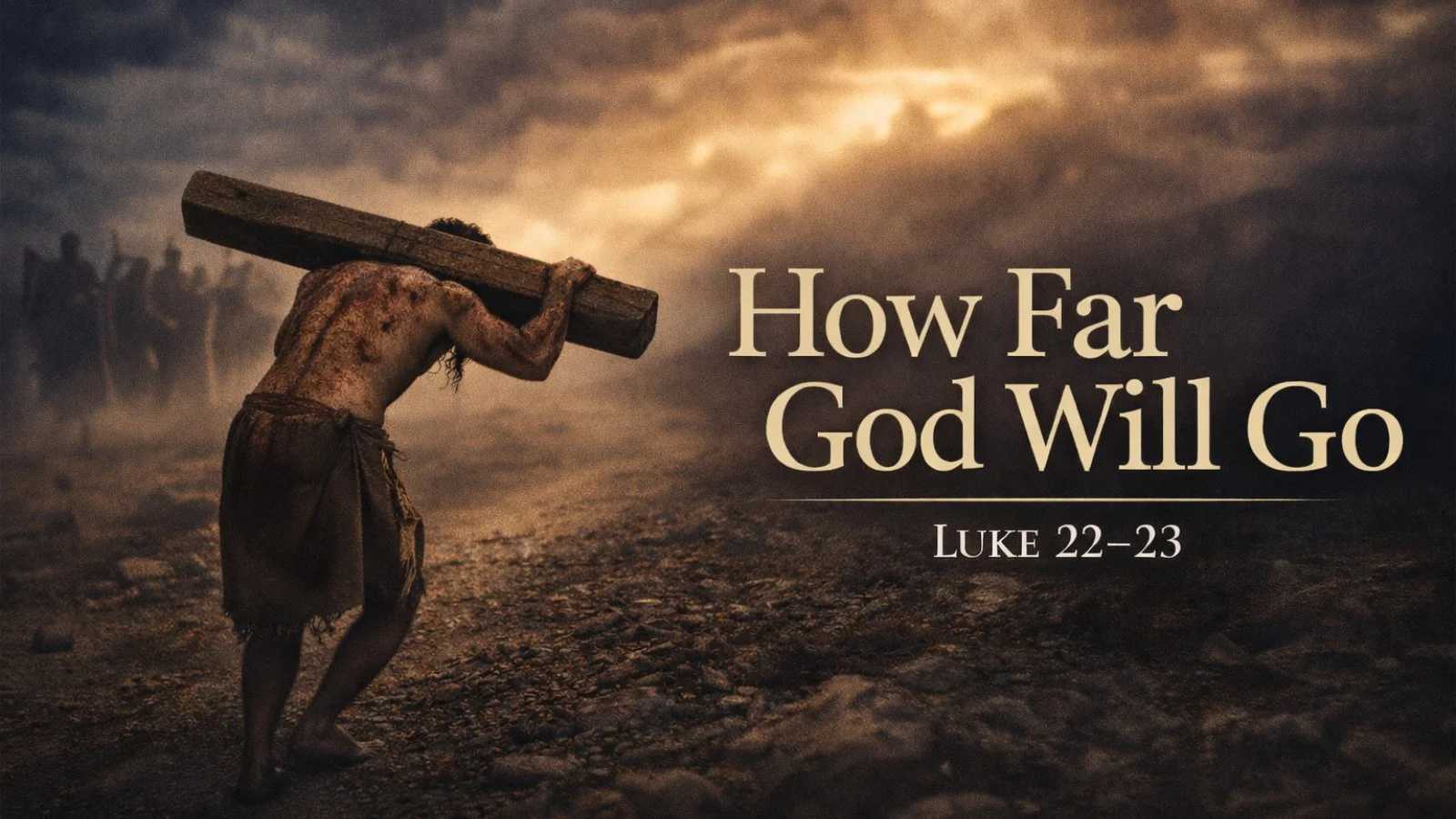
That is what makes the cross so important. The cross is not just the sad ending to the life of Jesus. It is the clearest picture in the Bible of how far God will go to pursue us. In this series, we have seen that God pursues the lost, the wandering, the stubborn, the proud, and the broken. Now we come to the end and ask one final question: How far will God go?
I. Pursuing in the Garden (Luke 22:39–46)
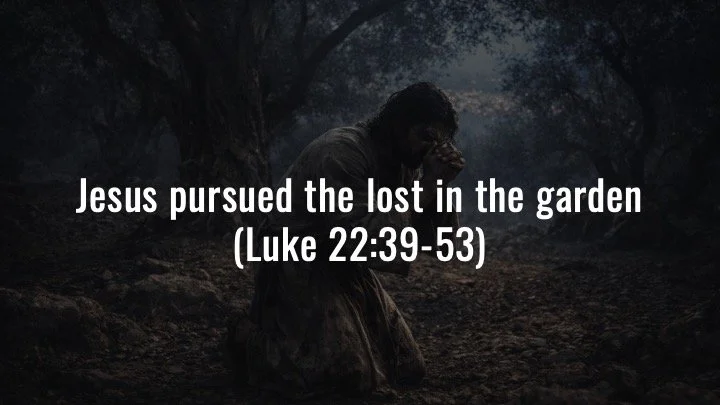
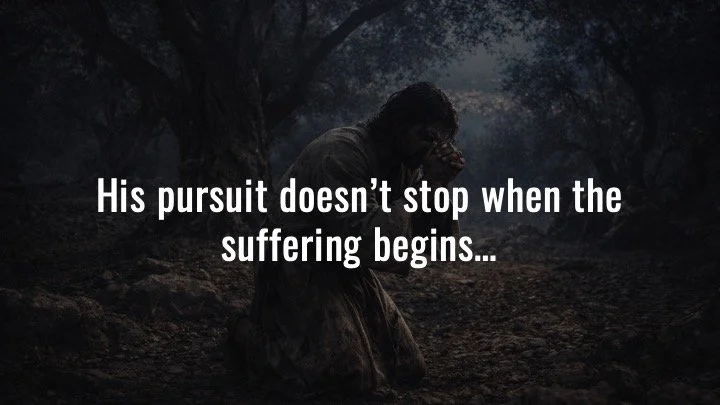
After confronting the leaders and warning Jerusalem, Jesus gathers with His disciples for the Passover. That night, He reveals that one of His own will betray Him. The disciples do not understand what is happening, but Jesus does. He goes to the garden of Gethsemane, and there we see something we do not see anywhere else. We get a window into His soul.
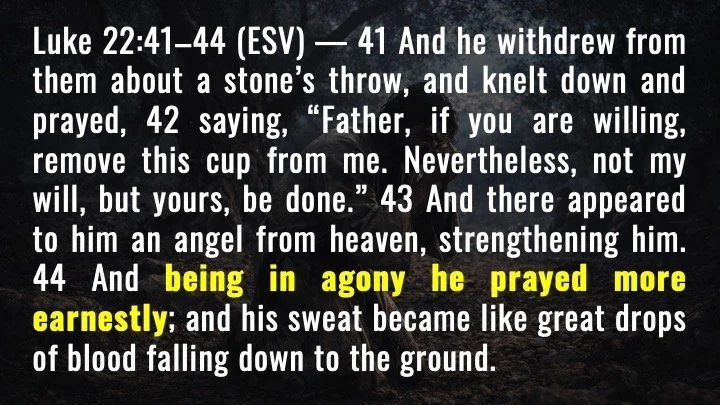
He prays, “Father, if you are willing, remove this cup from me. Nevertheless, not my will, but yours, be done.” Jesus knows exactly what is coming. He knows the suffering, the humiliation, and the weight of what He is about to bear. He is not stumbling into the cross. He is not being caught off guard by the pain. He sees it clearly.
And still, He does not turn away. He goes forward in pursuit of the lost.
This is where we begin to understand the pursuit of God. God did not pursue us blindly. This was not an accident. Jesus saw the cost and stepped forward anyway. His love is not cheap. He does not say, “I love you,” and then disappear when things get hard. His pursuit does not stop when suffering begins.
II. Pursuing Through Rejection and Mockery (Luke 22:47–23:25)
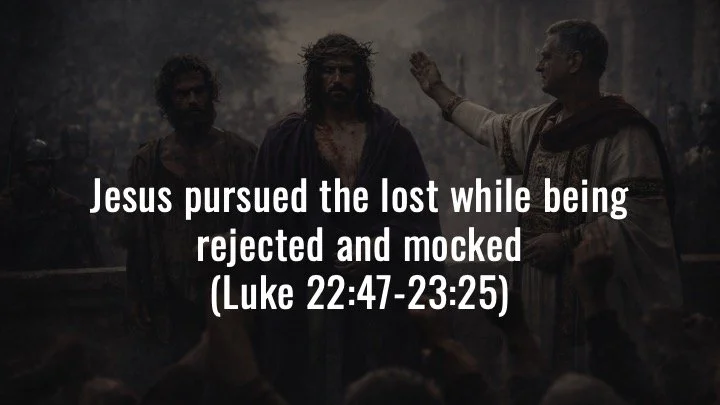
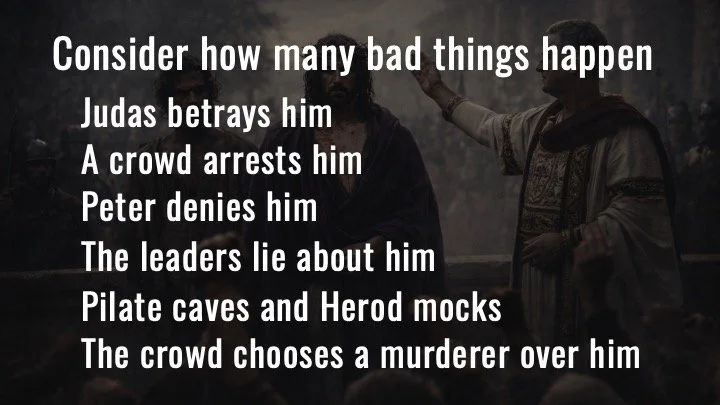
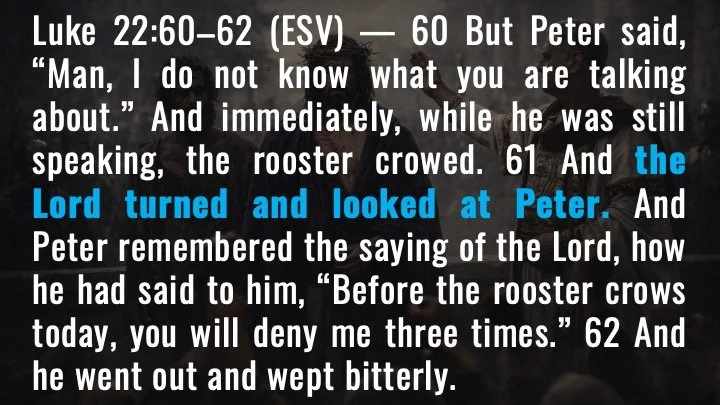
Once Jesus leaves the garden, everything begins to unravel quickly. Judas betrays Him. The crowd arrests Him. Peter denies Him. The guards mock Him. The leaders lie about Him. Pilate knows He is innocent but caves to pressure. Herod treats Him like entertainment. Then the crowd chooses a murderer over Him.
Sin is on full display. Treachery, cowardice, injustice, manipulation, hatred, and abuse of power all come pouring out into the open. Human beings are doing exactly what sinners do when they are left to themselves. They betray truth, protect themselves, bow to pressure, and choose darkness over light.
And through all of it, Jesus does not turn back. He continues His pursuit.
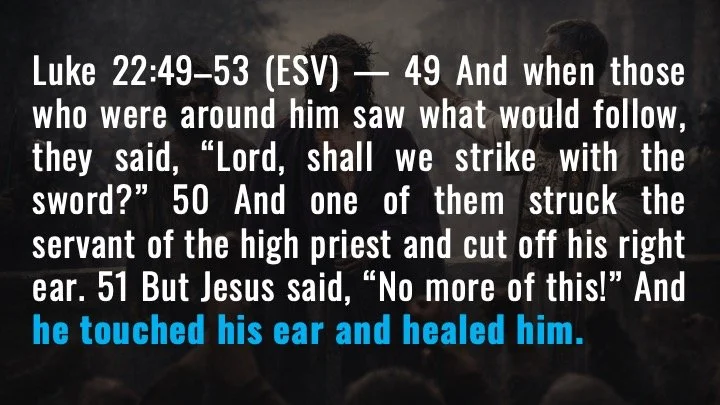
He heals the servant’s ear. He looks at Peter and breaks his heart. He remains silent under false accusation. He allows Barabbas, the guilty man, to go free. Do you see it? Jesus is not just telling us that God is patient and persistent. He is showing us.
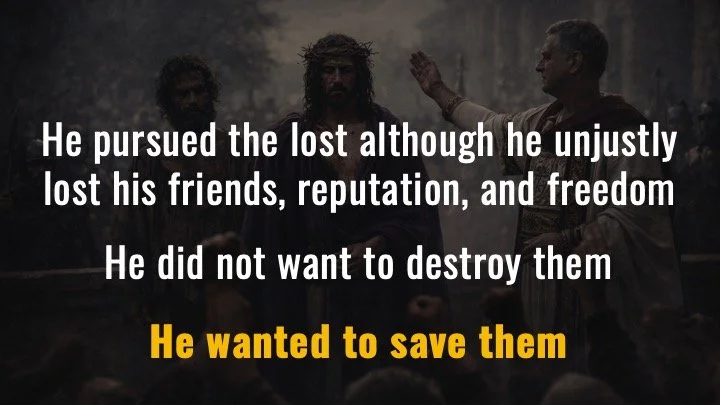
Imagine those hours. In the span of a single night, His friends disappear, His reputation is destroyed, and His freedom is stripped away. In their place come shame, rejection, and chains. He is dragged from place to place, mocked, beaten, and paraded in humiliation. The same crowd that once praised Him now shouts, “Crucify Him!”
And still, He keeps going.
Why? Because this is how far God will go. Jesus could have stopped it all. He could have judged them instantly. He could have called down wrath on every one of them. But He did not want to destroy them.
He wanted to save them.
III. Pursuing Through Suffering and the Cross (Luke 23:26–43)
By the time Jesus is led to the cross, you might think His work is finished. You might think there is nothing left for Him to do but die. But Luke shows us something incredible. Even on the way to die, Jesus is still pursuing people.
He has been scourged. His back has been torn open. He is so weak that someone else has to carry the cross for Him. Yet even then, He stops to speak. He turns to the daughters of Jerusalem and says, “Do not weep for me… weep for yourselves.” Even here, He is warning. Even here, He is calling people to see clearly. The day is coming when pursuit will give way to judgment, but not today. Today, God is still pursuing.
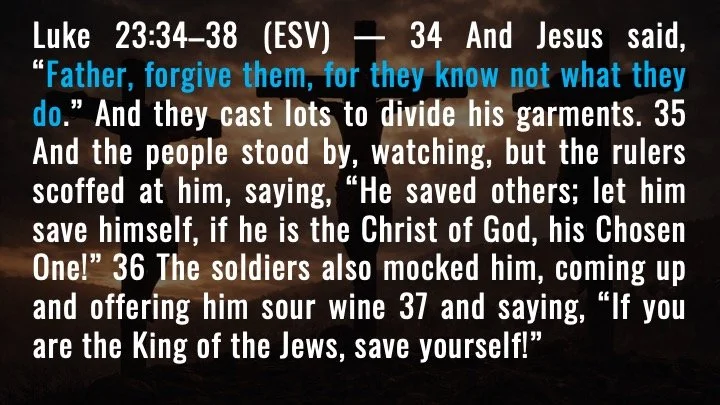
Then the nails are driven. He is lifted up, and every breath is agony. The mocking continues without mercy. “He saved others; let Him save Himself.” “If you are the king, save yourself.” “Save yourself and us!”
But Jesus does not come down.
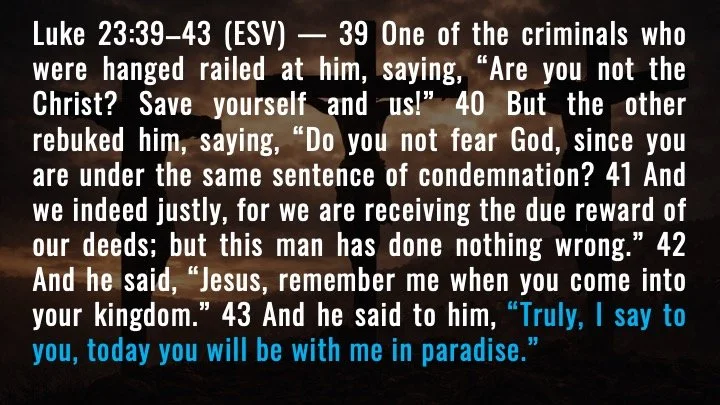
Instead, He ministers. He says, “Father, forgive them.” While they are killing Him, He is praying for them. One criminal mocks, but the other begins to see clearly. He admits their guilt and confesses Jesus’ innocence. Then he says, “Jesus, remember me.”
And Jesus responds, “Today, you will be with me in Paradise.”
Right there on the cross, Jesus is still saving. The world says, “He could not save Himself.” The cross says, “I stayed because this is how far I will go to save you.”
IV. God’s Pursuit Revealed
If you want to see the love of God, this is where you look. Not just in words. Not just in promises. You look in blood, suffering, and sacrifice. The cross is where the love of God is revealed most clearly and most powerfully.
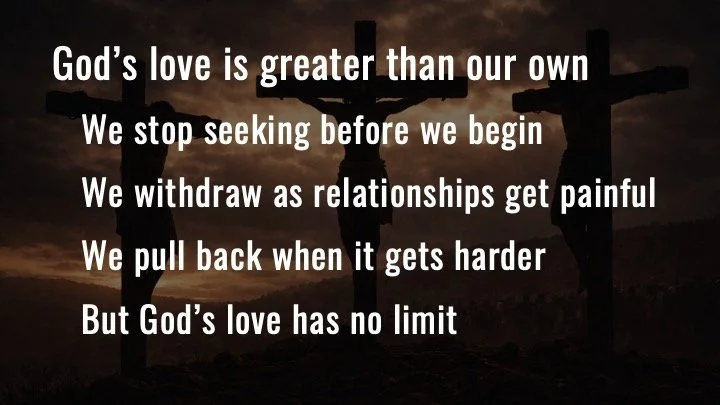
God’s love is greater than ours. We struggle to forgive small offenses. God forgives betrayal, denial, mockery, and murder. We withdraw when relationships get painful. God moves closer. We pull back when people hurt us and it gets hard. God presses forward, enduring everything necessary to bring the lost home.
That is what the cross reveals. It shows us a God whose love can absorb the worst of human sin and still answer with mercy.
V. The Call of the Cross
The cross is not just something to admire. It is something that speaks. It has a message for every one of us.
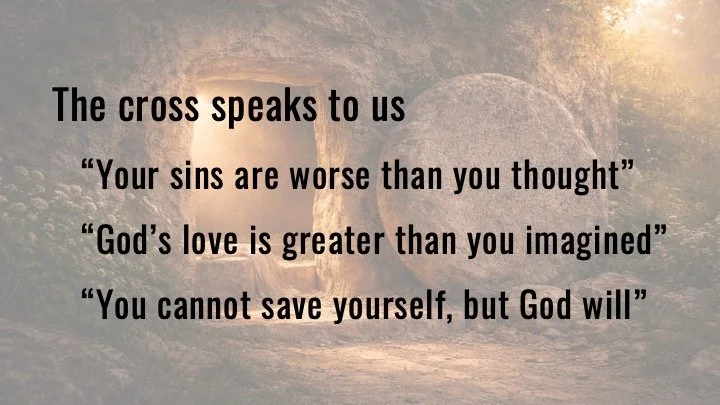
First, the cross says that your sin is worse than you thought. We are in that crowd. We are the betrayers, the deniers, the silent compromisers, the mockers. The cross tells us that we needed this. Our condition was so serious, so hopeless, so corrupt, that nothing less than the death of the Son of God could deal with it.
Second, the cross says that God’s love is greater than you imagined. God does not love like we love. When we are wronged, we pull back. We hold grudges. We protect ourselves. But God moves toward sinners. He forgives. He restores. He removes our sins as far as the east is from the west.
Third, the cross says that you cannot save yourself. Paul says, “If righteousness were through the law, then Christ died for no purpose.” That is the message. You cannot fix this. You cannot earn this. You cannot save yourself. But Jesus came to do what you could never do.
Finally, the cross says that the door is open. God has done everything necessary. The question now is simple.
Will you come home?
Conclusion
If you ever begin to doubt the love of God, do not look first at your circumstances. Look at the cross. Do not admire it from a distance. Do not study it like a symbol. Do not reduce it to an idea. See what happened there.
Jesus suffered. Jesus endured. Jesus stayed.
And He did it to show you exactly how far God will go. It is a love you do not deserve, but it is a love you can receive. So do not walk away. Turn from your sin. Come to Him. Be baptized into Christ and receive the forgiveness He died to give.