
The God Who Pursues (Luke 15:1-10)



Some people make you want to hide. Some people make you feel like one more wrong step and you are done. One more mistake and you are out. One more failure and you will never hear the end of it. Then there are people who make you want to come closer. Not because they are soft on what is wrong, but because they make you believe there might still be hope for you.
Sinners Wanted to Be Near Jesus
Luke 15 begins by showing us what kind of person Jesus was. “Now the tax collectors and sinners were all drawing near to hear him.” That is a stunning sentence.
These are not the polished people. These are not the respectable people. These are not the people everybody wanted their children to become. These are tax collectors and sinners. These are people with ugly reputations and messy lives. These are people others talked about in whispers. These are people who made decent folks uncomfortable. And yet, they are the ones moving toward Jesus. They are drawing near to hear Him.
That tells us something powerful before Jesus ever speaks a word in the parable. There was something about Jesus that made broken people believe He was worth hearing. He was not careless with sin. He did not flatter rebellion. He did not tell sinners they were fine just as they were. But there was something about Him that made the guilty think, “Maybe if I get near Him, I will not be crushed. Maybe if I get near Him, I can still find mercy. Maybe if I get near Him, there is still a way back to God.”
That is beautiful. Sinners did not mind getting close to Jesus. They wanted to hear Him. They felt safe enough to come near, not because Jesus lowered God’s standards, but because He revealed God’s heart. The kind of people others avoided found themselves leaning in when Jesus spoke. That says a lot about Christ. It says He was the kind of Savior who did not make ruined people think there was no point in coming. He made them think there was still hope if they would listen.
And that is still true. People who know they are broken do not need a polished speech about how decent they can become. They need to know whether there is mercy with God. They need to know whether the door is still open. They need to know whether the Holy One of heaven has any room for people who have made a mess of things. Luke says they were drawing near to hear Him, and that means the answer is yes. Jesus is the kind of Savior sinners want to hear.
Religious People Could Not Stand It
But not everybody in the crowd sees beauty in this moment. Luke says, “And the Pharisees and the scribes grumbled, saying, ‘This man receives sinners and eats with them.’” That should stop us. The very thing that should have thrilled them filled them with disgust. Lost people are getting close to Jesus, and the religious leaders are angry about it.
They despised sinners. They looked at them as defiling, dangerous, and beneath them. These were the kind of people you stayed away from if you wanted to keep yourself clean. Their sin might rub off on you. Their shame might stain you. Their uncleanness might lower you. So instead of seeing tax collectors and sinners as souls that needed to be recovered, they saw them as people to avoid. And now they see Jesus sitting with them, receiving them, eating with them, and they treat Him with contempt too.
Listen to the way they speak. “This man receives sinners and eats with them.” There is venom in that sentence. They are not asking a sincere question. They are not trying to understand. They are grumbling. That word matters. It is the sound of hard hearts muttering against grace. It is the sound of men who hate what they are seeing but do not want to say it too loudly. They are whispering with disgust about Jesus and everybody gathered around Him. Their contempt falls on the sinners for coming near and on Jesus for letting them.
That is what happens when a person cares more about appearing clean than seeing people made clean. The Pharisees and scribes had room in their religion for rules, appearances, and distance, but no room for mercy. They had built a version of holiness that kept sinners far away. They could not imagine a holiness so pure that it could move toward sinners without being stained. They could not imagine a righteousness that did not fear the presence of the guilty. So when the Son of God comes receiving sinners, they do not worship. They mutter.
And before we get too hard on them, we ought to admit this spirit still shows up. It is possible to know the Bible well and still have a cold heart. It is possible to care about truth and still despise people. It is possible to say all the right things about holiness and yet get irritated when grace starts reaching the wrong people. It is possible to sit in church and secretly think, “People like that make me uncomfortable.” The Pharisees are not just ancient men in robes. They are a warning. A man can be very religious and very far from the heart of God.
Jesus Shows Them What God Is Really Like
So Jesus answers their grumbling with two stories. He does not just argue with them. He paints pictures. And both pictures say the same thing. God does not see the lost the way the Pharisees do.
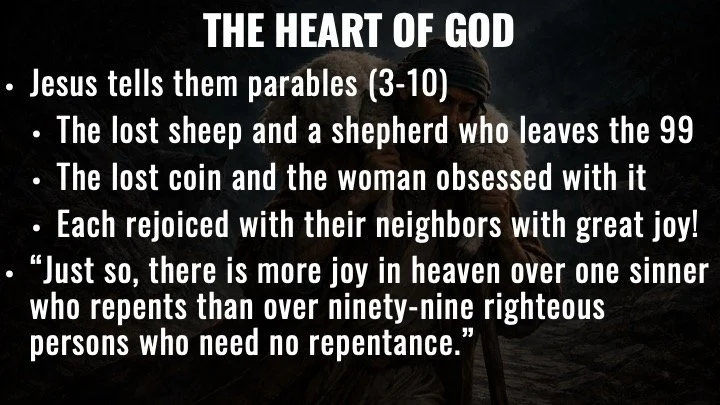
He says, “What man of you, having a hundred sheep, if he has lost one of them, does not leave the ninety-nine in the open country, and go after the one that is lost, until he finds it?” The point is simple, but it lands hard. One sheep is gone, and the shepherd does not say, “That is unfortunate, but I still have ninety-nine.” He does not treat one lost sheep like it no longer matters. He goes after it. And Jesus says he goes after it until he finds it.
That is the part that opens up the heart of God. He does not make a brief effort and then move on. He does not try for a little while and then shrug His shoulders. He seeks until he finds. That is not how the Pharisees saw sinners. They looked at sinners and wanted distance. God looks at the lost and moves toward them. He seeks until He finds.
Then Jesus says that when the shepherd finds the sheep, he lays it on his shoulders rejoicing. That is not the response of the Pharisees. They would have looked at the sheep with disgust. Jesus says the shepherd lifts it up with joy. He carries it home. Then he gathers his friends and neighbors and says, “Rejoice with me, for I have found my sheep that was lost.” Jesus says that is what heaven is like. There is joy in heaven over one sinner who repents.
Then He tells another story. A woman has ten silver coins and loses one. She lights a lamp, sweeps the house, and seeks diligently until she finds it. Again, the point is plain. One lost coin matters. It is not forgotten. It is not ignored. It is sought. She searches carefully until she finds it, and then she calls others to rejoice with her. Jesus says again that there is joy before the angels of God over one sinner who repents.
Now put those stories beside the Pharisees. The Pharisees see sinners and pull back. God sees the lost and moves toward them. The Pharisees grumble when sinners get near Jesus. Heaven rejoices when sinners repent. The Pharisees treat sinners like a problem to avoid. God treats them like souls worth searching for. That is the contrast.
And that tells us how much value God places on each lost soul. One sheep matters. One coin matters. One sinner matters. The lost are not a nuisance to Him. They are not beneath His attention. He does not share the perspective of the Pharisees and scribes. He seeks until He finds.
That is not new in Scripture. Isaiah had already said, “All we like sheep have gone astray.” Ezekiel had already condemned false shepherds for failing to seek the lost, and then God said, “I myself will search for my sheep and will seek them out.” Jesus is not inventing a new picture of God here. He is revealing the God the Scriptures had spoken about all along. The God who does not give up on wandering sheep. The God who does not leave the lost in the dark. The God who searches.
Jesus Is Not Just Telling the Story. He Is the Story.
And that is what makes Luke 15 so powerful. Jesus is not just describing God. He is showing Him. Why are tax collectors and sinners drawing near to hear Him? Because in Jesus, God has come near to seek them. Why are the Pharisees offended? Because the mercy of God is standing right in front of them, and they hate what it looks like.
Jesus is the Shepherd in action. He is the One receiving sinners and eating with them. He is the One who came to seek and to save the lost. Later in Luke, He will say those exact words about His mission. But here we get to see the heart behind them. He did not come just to expose sinners. He came to recover them. He did not come just to stand over the lost and lecture them from a distance. He came near.
And that should help us understand repentance too. The joy in these parables is not over lostness. It is over repentance. Heaven is not celebrating that people are broken. Heaven is celebrating that broken people are coming back to God. The Lord does not search for the lost so they can stay lost. He searches for them so they can be found. He receives sinners so they can hear, turn, and live.
When God Finds the Lost, Heaven Sings
So where does that leave us? It leaves us with a simple question. Which group in this passage sounds more like us? Do we look more like the tax collectors and sinners who knew they needed to get near Jesus? Do we look more like the Pharisees and scribes who grumbled because grace was reaching the wrong people? Or are we learning to rejoice with God when the lost are found?
That is where this text presses on the heart. Every one of us has more in common with the lost sheep than we want to admit. Every one of us needed mercy. Every one of us needed to be found. None of us came to God because we were cleaner than everybody else. We came because He sought us. We came because Jesus receives sinners.
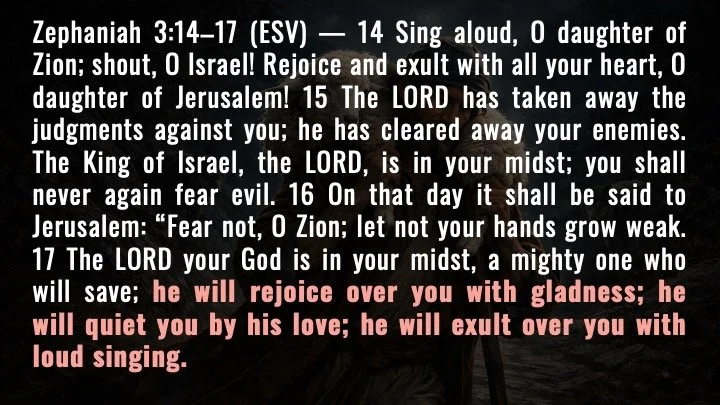
So if you feel far from God, do not stand back and think there is no point in coming near. Luke 15 says Jesus is exactly the kind of Savior you need. And if God has already found you, then do not stand in the corner grumbling when grace reaches somebody else. Rejoice. Rejoice when sinners repent. Rejoice when prodigals come home. Rejoice when broken people draw near to hear Jesus. Rejoice because that is what heaven does.
The Pharisees heard mercy and muttered. Jesus told them that heaven sings. May God save us from being the kind of people who grumble at grace. And may He make us more like our Savior, the One who receives sinners, the One who seeks until He finds, the One who shows us that every lost soul matters to God.